What is a DA PA checker?
A DA PA checker is an SEO tool that estimates the relative strength of a domain and/or a specific page, usually using a Moz-style model for DA/PA and additional signals such as spam risk indicators and link-popularity fields (depending on the provider and data source).
Typical outputs may include:
- Domain Authority (DA): a comparative domain-level score (commonly shown on a 1–100 scale).
- Page Authority (PA): a comparative page-level score (commonly shown on a 1–100 scale).
- Spam score / risk-style signals: flags that suggest you should investigate backlinks more closely.
- Link-related fields: metrics that help you understand scale and diversity of referring sources (wording varies by tool).
If you need a workflow built around large URL lists, use our bulk-focused page:
Bulk DA PA Checker
What is Domain Authority (DA)?
Domain Authority (DA) is a comparative metric developed by Moz that predicts how well a domain might compete in search results based on its link graph and related authority signals (as modeled by Moz—not by Google).
How to interpret DA without overreacting:
- Higher DA often correlates with a stronger or more mature link ecosystem—but it does not guarantee rankings.
- Lower DA does not automatically mean “bad SEO.” New sites, narrow niches, or brands that win on intent and quality can still perform well.
Authoritative external reference:
Moz Learn
What is Page Authority (PA)?
Page Authority (PA) measures the comparative strength of an individual URL, not the entire domain.
Why PA matters in real audits:
- Your homepage might show strong PA, while newer blog URLs show weaker PA.
- Product pages and landing pages can differ dramatically within the same site.
- For competitor analysis, PA helps you spot which specific URLs are carrying authority signals.
Why DA and PA still matter (even though Google doesn’t “use DA”)
Google does not use Moz DA as a direct ranking system. That does not make DA/PA useless—it means you must use them correctly.
Practical uses:
- Compare your site against competitors in the same niche and keyword set
- Prioritize pages that deserve internal links, updates, or promotion
- Spot outliers (very high or very low authority pages) worth investigating
- Build a clearer picture of link maturity alongside content quality and technical SEO
Authoritative external reference (people-first content mindset):
Google Docs
How to use DA PA Checker Hub (simple workflow)
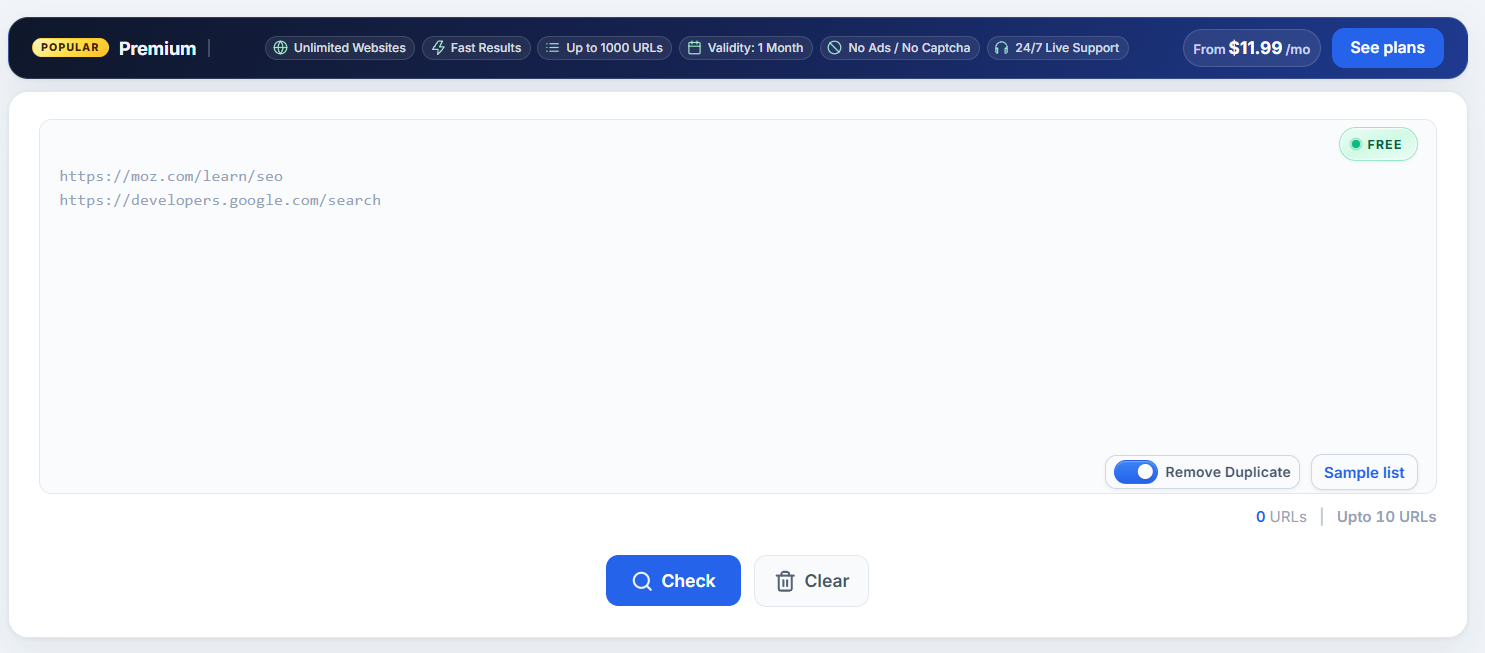
Step 1: Prepare your URL list
Paste URLs one per line. Remove duplicates when possible, and be consistent with http vs https if you want cleaner comparisons.
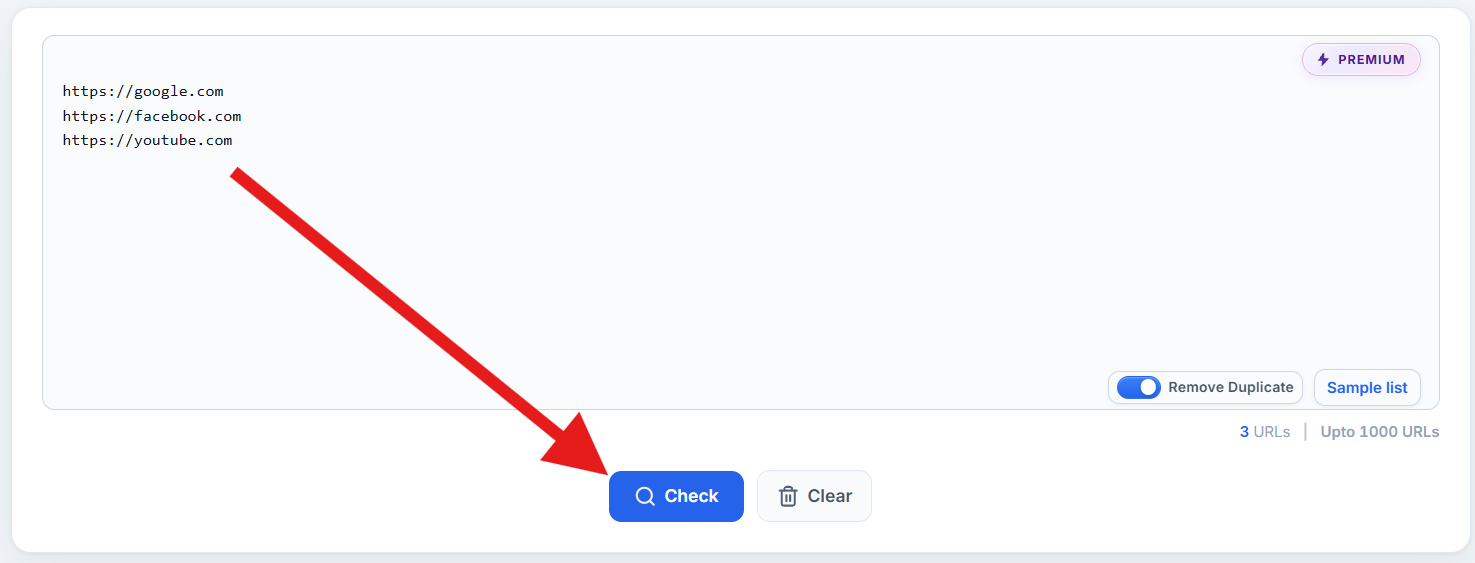
Step 2: Run the check
Click Check DA PA and wait for processing. Large batches can take longer depending on limits and server load.
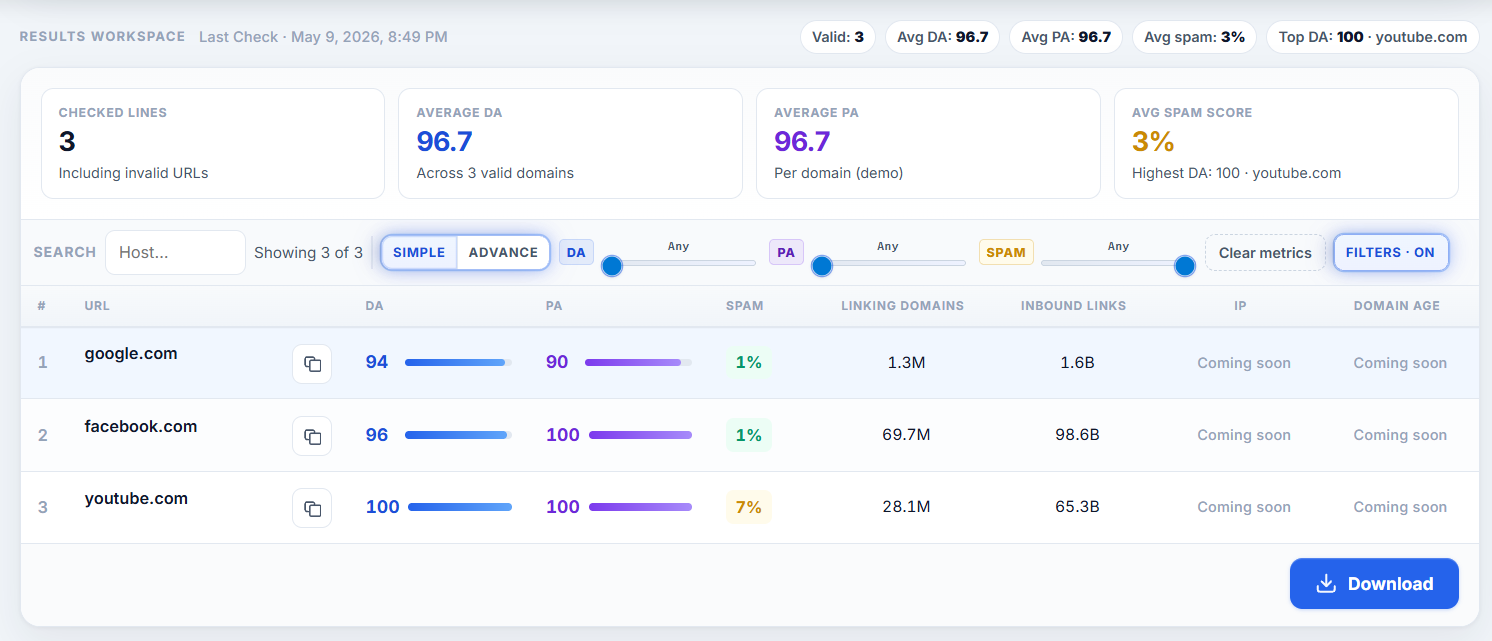
Step 3: Read the metrics as a set
Avoid deciding everything from DA alone. Combine DA + PA + spam/risk signals + referring domains / inbound links (whatever your report includes) to form a balanced view.
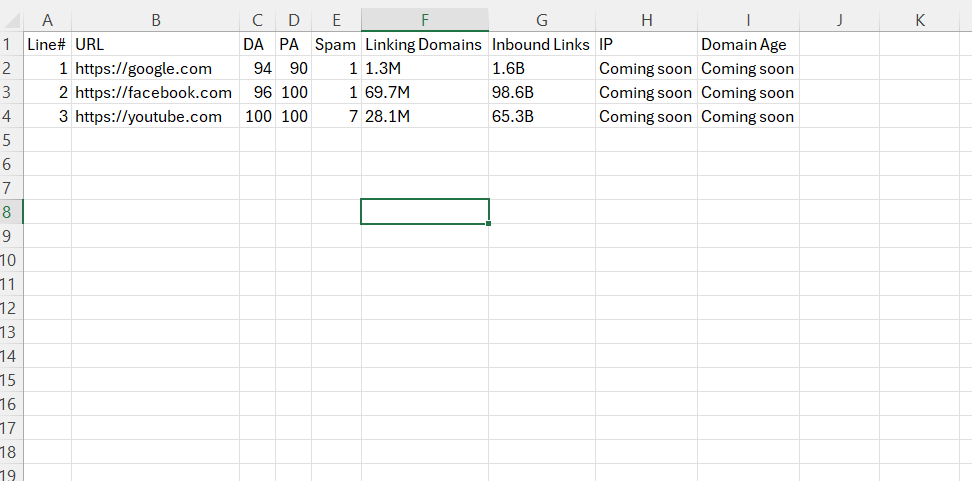
Step 4: Export and document
Download results for tracking, client reporting, or quarterly reviews. Pair exports with Google Search Console performance data whenever possible.
Internal link:
DA PA Checker Pricing
Key features you should expect from a serious checker
Fast bulk analysis
Checking many URLs at once saves time during audits and competitor scans.
Beginner-friendly workflow
Paste, check, filter, export—without needing a complex dashboard just to get a table.
Spam / risk awareness
Use spam-style scores as a screening signal, then validate with manual backlink review.
Exportable reporting
Exports help agencies standardize deliverables and help teams track changes over time.
What is a “good” Domain Authority score?
There is no universal “good DA” without context. A local service business and a global publisher should not be judged the same way.
General orientation (not a rule):
Better than a single number: compare competitors ranking for the same keywords you care about.
DA vs DR vs Authority Score (stop mixing them blindly)
Different platforms measure different things:
External reading (methodology awareness):
DR UR Checker
What commonly keeps DA lower than expected
- Weak or inconsistent link acquisition
- Toxic/low-quality backlinks (sometimes repairable, sometimes not)
- Thin or duplicated content across many URLs
- Weak internal linking and shallow site architecture
- New domain age (time matters)
- Limited topical authority and weak entity signals
Improving authority is usually a months-to-years game—not a weekend trick.
How to improve authority the right way (ethical, durable)
1) Earn high-quality backlinks
Editorial mentions, genuine partnerships, digital PR, and helpful resources outperform manipulative schemes.
2) Publish genuinely useful content
Answer real questions, show expertise, and keep pages updated when facts change.
3) Improve internal linking
Connect related pages so important URLs get discovered, supported, and contextualized.
4) Strengthen technical SEO
Speed, mobile usability, crawlability, indexing hygiene, and structured data where appropriate.
What is spam score (and how not to misuse it)
Spam-style scores estimate risk patterns in a link profile. A higher score means “investigate,” not “this domain is bad.”
Always validate with:
- referring domain quality
- anchor text diversity and manipulation patterns
- topical relevance
- your own business risk tolerance
Competitor analysis that actually produces work items
Instead of chasing random authority numbers:
- Identify who ranks for your target keywords
- Compare URL-level strength patterns, not only homepage DA
- Map content gaps (what they cover that you do not)
- Build a prioritized backlog: technical fixes + content upgrades + ethical link acquisition
Best practices when using authority metrics
Track trends, not noise
Weekly panic over tiny changes is usually unproductive.
Do not treat DA like a KPI for “Google success”
Traffic, conversions, and Search Console trends matter more for business outcomes.
Combine metrics with real performance data
Use Search Console, analytics, and keyword tracking—not a single third-party score.
Final thoughts
A free DA PA checker is valuable when it helps you compare sites honestly, plan better content, and prioritize SEO work that moves real metrics—clicks, impressions, leads—not vanity numbers alone.